
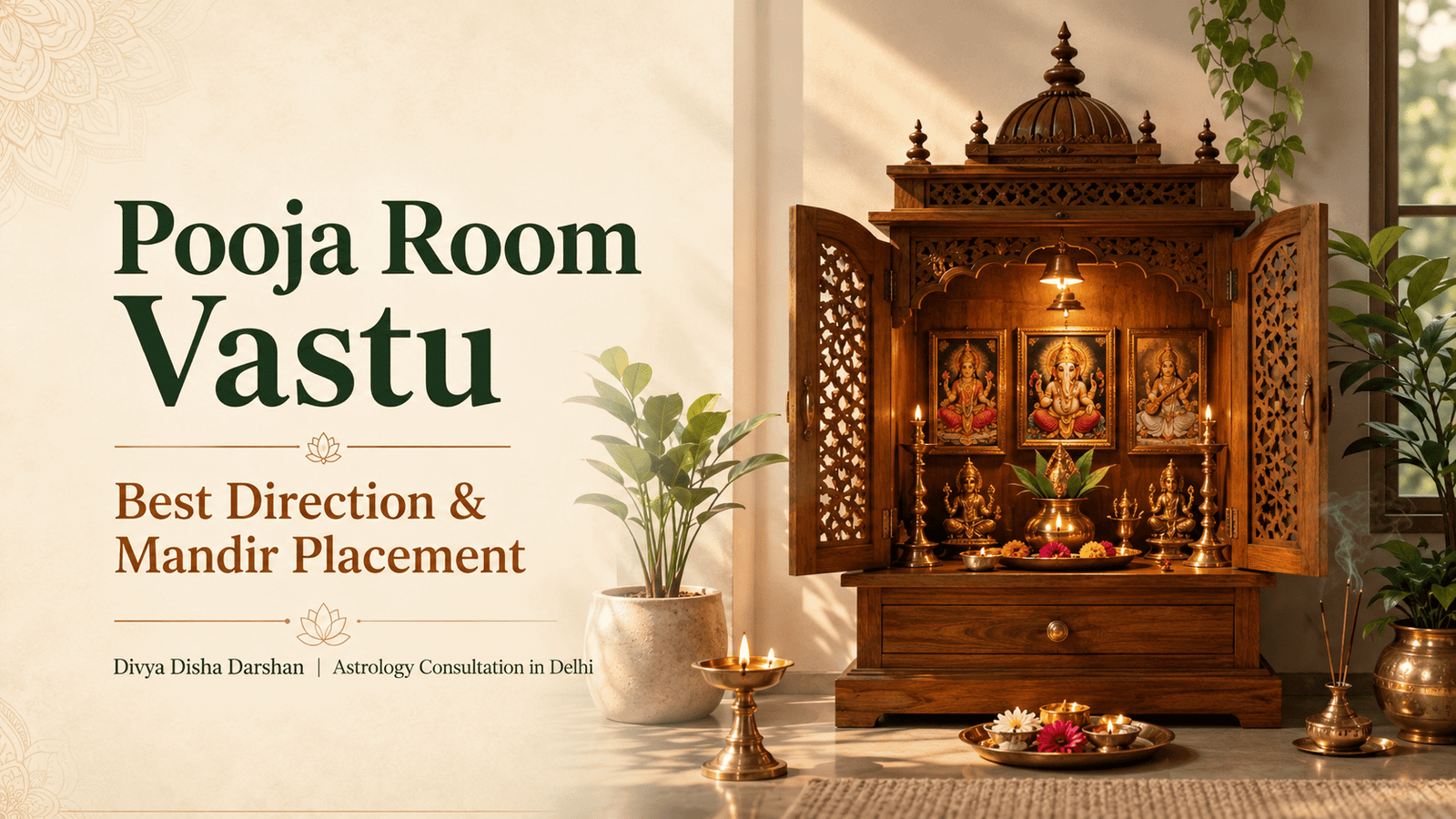
A pooja room is a meaningful part of many Indian homes. It provides a dedicated space for daily prayers, meditation and religious rituals. Whether you live in an independent house or a compact apartment, a thoughtfully arranged prayer area can help keep your daily worship organised and comfortable.
In traditional Vastu Shastra, the direction of the prayer room, the position of the mandir, the arrangement of idols and the surrounding space are commonly considered important. At the same time, practical factors such as natural light, ventilation, cleanliness and fire safety should also guide your decisions.
You do not need an elaborate temple or an expensive renovation to create a peaceful prayer space. A simple mandir, suitable lighting, organised storage and reusable decorations can work well in many homes.
This guide explains Pooja Room Vastu, including the preferred direction, mandir placement, idol orientation, ideas for flats and eco-friendly ways to plan your prayer area.
Quick Answer: Which Direction Is Best for a Pooja Room?
According to common traditional Vastu recommendations, the northeast direction, also called the Ishan corner, is generally preferred for a pooja room. East and north are often considered alternatives when the northeast is not practical for the home’s layout.
Many traditional guidelines suggest that people face east or north while praying. However, the exact arrangement of idols and the mandir can vary according to religious customs and the available space.
Here are the main points to remember:
- Consider the northeast when planning a new prayer area, if it suits your floor plan.
- Explore east or north as possible alternatives.
- Keep the mandir stable, clean and accessible.
- Arrange idols according to your household’s religious practices.
- Provide suitable lighting and ventilation.
- Keep diyas and incense away from curtains, paper and other combustible materials.
- In a flat, consider a dedicated cabinet, wall-mounted mandir or suitable shelf.
- Reuse existing furniture and decorations wherever practical.
These recommendations reflect traditional Vastu beliefs rather than scientifically established guarantees of prosperity, health or family harmony. Choose an arrangement that respects your traditions while meeting your home’s practical needs.
What Is Pooja Room Vastu?
Pooja Room Vastu refers to traditional principles used to plan and arrange a home temple or prayer area. These principles commonly address the room’s direction, the mandir’s location, idol orientation, cleanliness and the relationship between the prayer space and other parts of the home.
The purpose of planning the space is to create a dedicated area that supports regular worship and remains easy to maintain.
Some common considerations include:
- Direction and location of the prayer area
- Position and height of the mandir
- Orientation of idols
- Nearby rooms, doors and windows
- Lighting and ventilation
- Storage for prayer accessories
- Cleanliness and ease of maintenance
- Safe placement of diyas and incense
A useful approach is to consider traditional recommendations alongside your actual floor plan. A prayer area should not obstruct a passage, compromise ventilation or require unsafe structural changes.
Which Is the Best Pooja Room Direction as per Vastu?
The pooja room direction as per Vastu is one of the most frequently discussed aspects of planning a home mandir. The northeast is commonly preferred in traditional guidance, although east and north may also be considered.
1. Northeast Direction: The Ishan Corner
The northeast corner, traditionally known as the Ishan corner, is commonly recommended for a pooja room.
If you are designing a new home, you can discuss this preference with your architect or interior designer while planning the floor layout. This may help you allocate a suitable prayer area without affecting the function of other rooms.
However, the northeast should not be selected at the expense of essential requirements such as safe access, ventilation or practical use of the space.
2. East Direction
East is another direction commonly considered for a home mandir in traditional Vastu guidance.
If the area receives natural morning light, it may feel bright and welcoming. Direct sunlight is not essential, and the space should remain comfortable throughout the day.
Before choosing this location, consider the available floor area, nearby furniture and the amount of space needed for daily prayer.
3. North Direction
North is also considered an alternative in many traditional Vastu interpretations.
Whether this direction works for your home depends on the existing layout, fixed fixtures and available space. Evaluate the whole floor plan rather than choosing a direction without considering practical requirements.
4. What If the Northeast Corner Is Not Available?
Many existing homes and apartments have fixed walls, kitchens, bathrooms and limited floor space. Moving these elements may be expensive or impractical.
If the northeast corner is unavailable, consider other locations that provide a clean, dedicated and accessible prayer area. Avoid major renovation solely to follow one general directional recommendation.
The most suitable arrangement is one that works within your property’s limitations and allows you to maintain the space safely.
Best Direction for Home Mandir: What Should You Consider?
The best direction for home mandir placement depends on both traditional preferences and the home’s actual layout.
Before deciding, consider these factors:
- Available space: The mandir should fit without overcrowding the room.
- Accessibility: You should be able to approach and use it comfortably.
- Stability: The platform, cabinet or shelf should safely support its contents.
- Lighting: Provide enough light for prayer and reading.
- Ventilation: Consider airflow, especially if incense is used.
- Daily routine: The arrangement should suit the people who use the prayer area.
- Safety: Keep open flames away from combustible materials.
Traditional Vastu recommendations can help guide your decision, but not every property can accommodate the same arrangement. A practical solution is preferable to an expensive change that creates new problems elsewhere in the home.
Mandir Placement as per Vastu: Important Tips
Mandir placement as per Vastu traditionally involves more than selecting a direction. The mandir’s height, stability, accessibility and the surrounding area also deserve attention.
Choose a Stable Platform
Place the mandir on a stable platform or install it using a suitable mounting system. Check that the shelf or cabinet can safely support the mandir, idols and prayer accessories.
Many traditional arrangements use a raised platform for idols. The exact height and arrangement can vary, so consider your household’s customs and the available space.
Keep the Mandir Accessible
Leave enough room to stand or sit comfortably during prayer. Avoid placing the mandir where an open door, large furniture or regular household movement blocks access.
If older family members use the space, consider comfortable reach and a clear walking route.
Keep Idols Secure and Organised
Arrange idols according to your religious customs. Make sure they are stable and that smaller accessories cannot fall onto a diya or incense holder.
Avoid overcrowding the platform with objects that are rarely used. Store occasional-use items separately to make everyday cleaning easier.
Consider Nearby Rooms and Fixtures
Some traditional Vastu interpretations consider the position of the prayer area in relation to bathrooms, staircases and other rooms. Recommendations can vary, and existing homes may offer limited alternatives.
Assess your actual layout before making changes. Do not compromise ventilation, accessibility or building safety to follow a general rule.
Maintain Cleanliness
Regularly clean the mandir, platform and surrounding area. Store prayer books, lamps and other accessories in suitable places so that the space remains organised.
A simple cleaning routine can help maintain the area without requiring expensive products or frequent decorative purchases.
Which Direction Should Idols Face in a Home Mandir?
Idol orientation is another common question when planning a home temple.
Many traditional recommendations suggest that the person praying face east or north. The direction in which the idols face depends on the mandir’s arrangement and the religious practices followed by the household.
There is no single arrangement that should be treated as universally applicable to every home. Customs can vary according to the deity, family tradition and religious guidance.
If you are moving an existing idol, follow the practices relevant to your household. Ensure that the idols are stable, the platform is clean and dry, and lamps are positioned safely.
For a compact prayer area, prioritise a secure arrangement that allows comfortable worship and regular cleaning.
Pooja Room Vastu for Flats and Small Apartments
Pooja room Vastu for flats requires consideration of limited floor space, existing fixtures and everyday movement. A separate prayer room may not be possible in every apartment, but a dedicated prayer area can still be created.
Use a Compact Mandir Cabinet
A compact cabinet can provide a defined place for idols and prayer accessories without occupying an entire room.
Choose a design that fits the available area and allows easy access. Built-in storage may help keep the prayer space organised without adding several separate shelves.
Consider a Wall-Mounted Mandir
A wall-mounted mandir can save floor space in a small apartment. It must be securely installed using a mounting system suitable for the wall and the weight it will carry.
Avoid overloading shelves or installing the mandir where it interferes with electrical fittings, doors or everyday movement.
Use a Dedicated Shelf or Niche
If a cabinet is not practical, a clean shelf or niche may provide a dedicated prayer area.
Keep it reserved for religious items rather than using it for general household storage. Select a location that remains accessible and can be cleaned regularly.
Create Visual Separation
In an open-plan apartment, a small partition or cabinet can help distinguish the prayer area from the surrounding room.
Choose a design that does not block natural light, ventilation or movement. Simple arrangements can work well without elaborate construction.
Can a Mandir Be Placed in the Living Room?
Yes. A living room may accommodate a dedicated prayer area if the arrangement suits the household.
A cabinet, niche or suitable shelf can help define the space. Keep the mandir away from busy walking routes and make sure it can be used without obstructing everyday activities.
If you are planning changes to other parts of your home, you may also find our guide to Main Door Vastu: Best Direction, Placement and Remedies useful.
Pooja Room Colours and Decoration
Cream, off-white, soft beige and muted earthy shades are common choices for a calm prayer area. The right colour depends on the room’s lighting, existing décor and personal preference. Traditional colour recommendations can vary.
For a practical design:
- Choose finishes that are easy to clean.
- Avoid excessive decoration in a compact space.
- Keep fabrics, paper and other combustible materials away from flames.
- Reuse decorations that are still in good condition.
- Select comfortable lighting for reading and performing rituals.
- Leave enough room to clean the mandir and surrounding surfaces.
A meaningful prayer space does not require frequent purchases or elaborate decoration. Consider the materials and accessories already available in your home before buying anything new.
Eco-Friendly Pooja Room Ideas for a Sustainable Home
An eco-friendly prayer area can be simple, durable and easy to maintain. Thoughtful choices can reduce unnecessary purchases while keeping the space organised.
1. Reuse Your Existing Mandir
If your current mandir is in good condition, consider cleaning, repairing or refinishing it instead of replacing it.
Reusing furniture and accessories makes better use of existing materials and can reduce unnecessary consumption.
2. Choose Durable Materials
If you need a new mandir, look for a well-made design that suits your space and can be used for years.
Wood, metal and stone are common options, but no material is automatically sustainable simply because it is described as natural. Durability, sourcing, manufacturing and maintenance also matter.
3. Make Use of Natural Light
If your prayer area receives suitable daylight, open curtains or blinds when appropriate. Natural light can make the area feel brighter during the day.
Avoid placing the mandir where direct sunlight or heat could damage materials or make the area uncomfortable.
4. Use Energy-Efficient Lighting
LED lighting can be a practical choice for illuminating a pooja room. Select suitable brightness for reading prayer books and performing rituals.
The U.S. Department of Energy explains the potential benefits of energy efficiency and energy-efficient lighting. Switch off decorative lights when they are not needed to avoid unnecessary electricity use.
5. Reduce Disposable Decorations
Instead of buying new decorations for every occasion, reuse items that are still in good condition.
Consider reusable fabric decorations, durable containers and existing decorative pieces during festivals. Where appropriate, dispose of flowers and other offerings responsibly according to local waste-management options.
6. Organise Prayer Accessories
Use a reusable tray, container or dedicated drawer to organise incense, cotton wicks, prayer books and other essentials.
Good storage makes the space easier to clean and helps prevent duplicate purchases of items you already own.
7. Choose Easy-to-Maintain Finishes
A pooja room can collect dust, oil residue and incense particles. Smooth, durable surfaces that are easy to wipe clean can simplify maintenance.
Choose materials according to durability, cleaning requirements and suitability for the location rather than appearance alone.
For more ideas about planning other areas of your home, explore our guide to Kitchen Vastu.
Diya and Incense Safety in the Pooja Room
Many prayer routines involve an open flame or incense. Safety should take priority over decoration or directional preferences.
Follow these precautions:
- Place diyas on a stable, heat-resistant surface.
- Keep flames away from curtains, paper, wooden decorations and other combustible materials.
- Do not position a burning diya beneath an unstable shelf.
- Never leave a burning diya or incense unattended.
- Keep matches, lighters and hot items away from children.
- Extinguish flames before leaving the room or going to sleep.
- Maintain suitable ventilation when using incense.
The National Fire Protection Association’s candle safety guidance explains the importance of keeping open flames away from materials that can burn and never leaving them unattended. Although the guidance discusses candles, the basic precautions are relevant when planning a safe area for traditional lamps.
Common Pooja Room Vastu Mistakes to Avoid
1. Choosing a Direction Without Checking the Layout
The northeast is commonly preferred in traditional Vastu guidance, but accessibility, ventilation and existing fixtures also matter.
2. Blocking a Passage
The mandir should not obstruct doors, stairs or everyday movement. Leave enough room to approach and use it safely.
3. Ignoring Lamp Safety
Keep flames away from fabrics, paper and other combustible materials. Never leave a burning diya unattended.
4. Allowing Accessories to Accumulate
Unused containers, decorations and prayer items can make the area difficult to clean. Store only what you need and review the arrangement periodically.
5. Buying Unnecessary Vastu Products
A prayer area does not require numerous decorative objects or remedies. Start with a suitable location, safe placement, cleanliness and organisation.
6. Making Structural Changes Without Professional Advice
Changes to walls, plumbing or electrical points can involve cost and safety risks. Consult an appropriate building professional before undertaking structural work.
7. Treating Vastu as a Guaranteed Outcome
Vastu is a traditional system of spatial planning. Its recommendations should not be presented as guarantees of wealth, health, relationship success or family harmony.
Pooja Room Vastu Checklist
Before finalising your home mandir, review this checklist:
- Consider the northeast if it suits your floor plan and traditional preferences.
- Evaluate east or north as possible alternatives.
- Choose a stable and accessible place for the mandir.
- Arrange idols according to your family’s religious customs.
- Keep the area clean, dry and organised.
- Leave comfortable space for sitting or standing during prayer.
- Provide suitable lighting and ventilation.
- Keep diyas and incense away from combustible materials.
- Avoid blocking doors, windows and passageways.
- Reuse furniture and decorations where practical.
- Avoid unnecessary purchases and structural changes.
This checklist can help you plan your prayer area while allowing room for your household’s preferences and the practical limitations of your home.
Frequently Asked Questions About Pooja Room Vastu
1. Which direction is best for a pooja room as per Vastu?
The northeast, also called the Ishan corner, is commonly recommended in traditional Vastu guidance. East and north are often considered alternatives if the northeast is unavailable. Consider your complete floor plan before deciding.
2. What is the best direction for a home mandir?
The northeast is commonly preferred in traditional recommendations. East and north may also be considered depending on the available space, home layout and religious customs followed by your household.
3. What is the correct mandir placement as per Vastu?
Traditional recommendations consider the direction, idol arrangement and location within the home. Choose a stable, clean and accessible place that suits your floor plan and allows safe use of diyas and incense.
4. Is Pooja Room Vastu different for flats?
The basic traditional considerations are similar, but flats often have less space and fixed layouts. A dedicated cabinet, wall-mounted mandir or suitable shelf may be a practical option when a separate prayer room is not possible.
5. Can a mandir be placed in the living room?
Yes. A living room can accommodate a dedicated prayer area if it suits the household. A cabinet or niche can help define the space while keeping it accessible and organised.
6. Which direction should I face while praying?
Many traditional recommendations suggest facing east or north while praying. The appropriate arrangement depends on the mandir’s position and the religious customs followed by your household.
7. Can a pooja room be near a bathroom?
Traditional recommendations often prefer separating the prayer area from a bathroom, but interpretations vary and existing layouts can limit options. Assess the available space before considering renovation.
8. How can I make my pooja room eco-friendly?
Reuse your existing mandir, choose durable materials, use energy-efficient lighting where appropriate, organise reusable accessories and avoid unnecessary decorations.
9. Is a separate pooja room necessary?
A separate room may be preferred in some traditional recommendations, but it is not practical in every home. A well-organised cabinet, niche or dedicated shelf can be a workable alternative.
10. Does Pooja Room Vastu guarantee prosperity?
No. Vastu is a traditional system of spatial planning and should not be presented as a guarantee of financial, health or personal outcomes.
When Can a Vastu Consultation Help?
General guidelines can help you understand traditional pooja room placement, but every property has its own layout and limitations.
A consultation may be useful if you want to discuss:
- Pooja room direction and location
- Mandir placement within an existing floor plan
- Space constraints in a flat
- The relationship between the prayer area and nearby rooms
- Practical, non-structural adjustments
- Vastu considerations during new-home planning
At Divya Disha Darshan, Asha Bamola offers astrology and Vastu-related consultation services from Pitampura, Delhi. A consultation can discuss traditional Vastu considerations in the context of your property’s layout, household preferences and practical limitations.
To explore the available service, visit our Vastu Shastra Consultation in Delhi page.
Final Thoughts
Pooja Room Vastu involves more than choosing a direction for the home temple. Traditional recommendations also consider mandir placement, idol orientation, cleanliness and the relationship between the prayer area and the rest of the home.
The northeast is commonly preferred in traditional Vastu guidance, while east and north may be considered alternatives. In flats and existing homes, a compact and well-maintained prayer area can be more practical than making major structural changes.
An eco-friendly pooja room can be created through simple decisions: reuse existing furniture, choose durable materials, use energy-efficient lighting and avoid unnecessary decorations. Above all, keep the space accessible, organised and safe for daily worship.
The most suitable arrangement is one that respects your household’s traditions while working with the actual design and needs of your home.